



What is a Colonoscopy?
A colonoscopy is a day-case procedure in which the inside of the large intestine (colon and rectum) is examined. A colonoscopy is commonly used to evaluate gastrointestinal symptoms, such as rectal and intestinal bleeding, or changes in bowel habit. Colonoscopy is also advised in individuals without symptoms to check for colorectal Polyps or cancer. A screening colonoscopy is recommended for anyone aged 50 years or older, and persons with a family history of colon polyps or cancer should be screened at an age 10 years younger than it was diagnosed in the family member.
What Happens Before a Colonoscopy?
To complete a successful colonoscopy, the bowel must be clean so that the physician can clearly view the inside of the colon it is very important that you read and follow all the instructions for your bowel preparation well before the procedure. Without proper preparation, the colonoscopy will not be successful and may have to be repeated. You may experience some irritation of the skin around the anus due to passage of liquid stools.
This can be eased by:
Applying a thin layer of Vaseline around the anus before drinking the PicoPrep, and after each bowel movement. Wiping with cotton wool soaked in warm water, rather than using toilet paper. Non-scented disposable wet wipes can also be used. Dry by dabbing with a soft towel or cloth. Sit in a bath filled with warm water, dab dry with a towel and apply Vaseline.
What Happens During a Colonoscopy?
The doctor will insert a long flexible instrument into the rectum and will advance to the caesium (beginning of the colon). If necessary pieces of tissue (biopsy) can be removed for testing and polyps can be identified and removed. The colonoscopy may allow accurate diagnosis and treatment of colorectal problems, without the need for a major operation. The colonoscope is disinfected between procedures. You will have an intravenous line inserted (a “drip”) and will be lying on your left side. A sedative and a pain relieving drug will be administered to make you more relaxed during the procedure. Your vital signs are monitored, and you will be breathing oxygen to maintain a normal blood oxygen concentration. The procedure lasts between 20 and 40 minutes on average, and you will be allowed to rest until fully awake. You may feel slightly bloated and uncomfortable after the procedure, due to air inserted into your colon to improve visualization.
What Happens After a Colonoscopy?
MEDICATION:
DIABETICS if possible, PLEASE check your sugar levels the evening and morning omit medication the morning of the procedure.
WARFARIN – stop 4 days prior to procedure. If unsure whether you are allowed to stop medication, please check with your physician or cardiologist.
IRON TABLETS must be stopped one week prior to the procedure.
ALL ROUTINE MEDICATION CAN BE TAKEN.
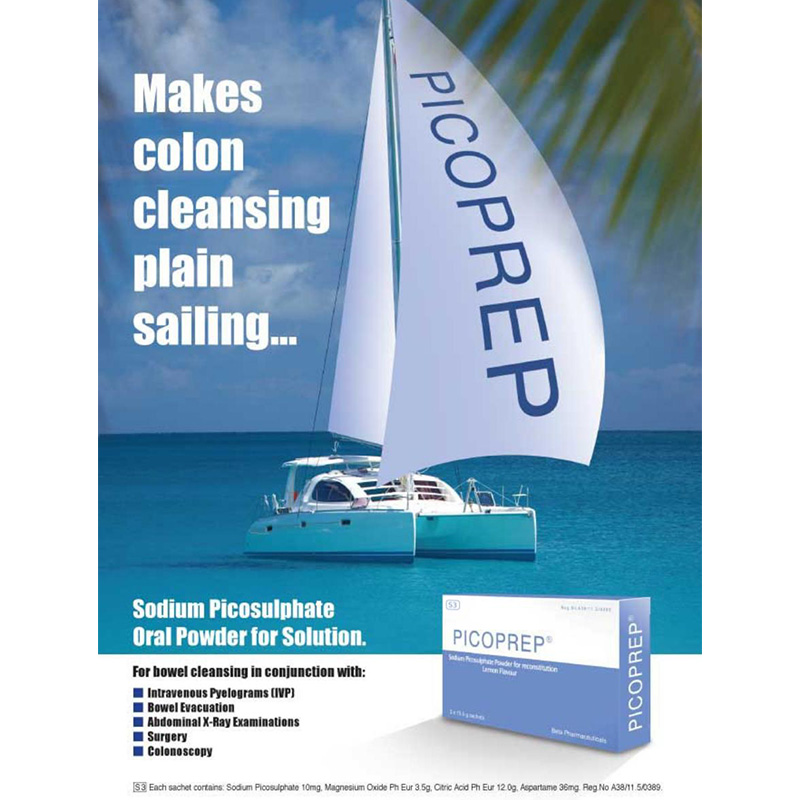
INSTRUCTION FOR COLON PREPARATION with PICOPREP
TWO days before the procedure
Follow a soft, Fibre-free diet on this day e.g. Pasta, pumpkin, steamed fish or chicken, clear soup, clear jelly. Avoid fibrous vegetables and fruit with seeds or pips.
THE DAY BEFORE THE COLONOSCOPY
Have a normal breakfast, and at 13h00 a light lunch of boiled/poached egg and white bread with tea/coffee or fruit juice
Thereafter CLEAR FLUIDS ONLY – drink at least one glass per hour from 13h00 until bedtime.
Recommended fluids :
Water, Black Tea / Coffee, Clear strained chicken noodle soup,
Bovril drinks, clear fruit juices eg Apple, Litchie, Grape juice, Isotonic drinks (Energade, Game),
Rehidrate & Jelly (only green and yellow)
No milk or dairy products allowed
No orange, red & purple drinks allowed.
Drink only clear fluids for supper.
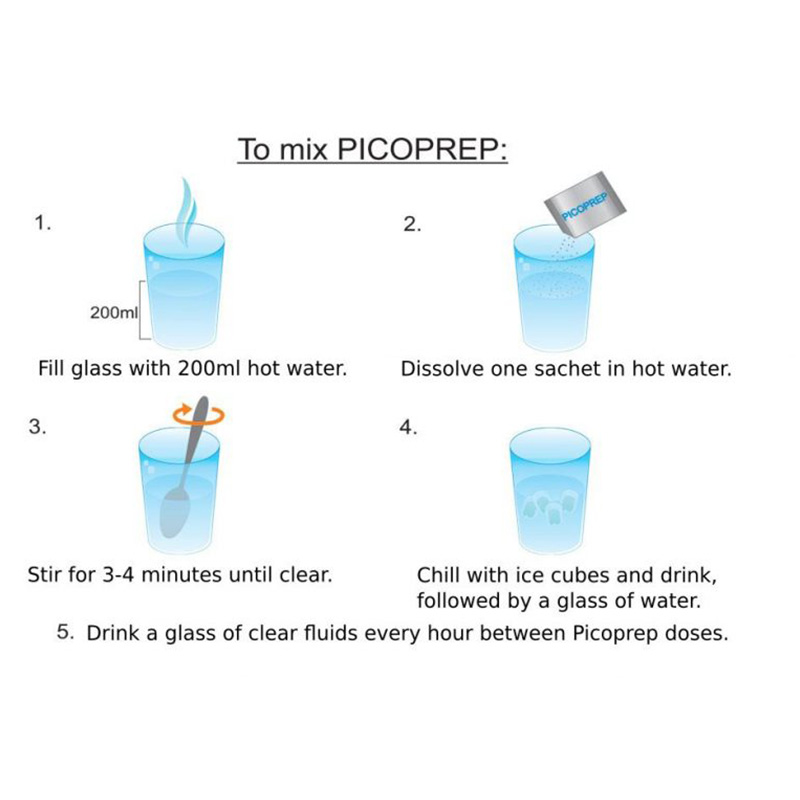
16h00 : Mix one sachet PicoPrep in a glass of hot water & stir to form a clear solution.
Chill with ice and drink followed by another glass of water.
The doctor may prescribe the next sachet to be taken at 20h00 followed by a glass of water.
DAY OF THE COLONOSCOPY
08h00 : Mix one sachet PicoPrep as before and drink followed by a glass of water.
Small sips of water or clear liquids may be taken until 10h00
Nothing more to drink for 4 hours before the procedure.
Sedation is given – please ensure there will be someone to drive you home.
It is beneficial to take QuatroFlora capsules after the procedure to restore intestinal flora.
INSTRUCTIONS FOR COLON PREPARATION with PICOPREP
TWO days before the procedure:
Follow a soft, Fibre-free diet on this day e.g. Pasta, pumpkin, steamed fish or chicken, clear soup, clear jelly. Avoid fibrous vegetables and fruit with seeds or pips.
ONE day before the procedure:
At 08h00 – Breakfast of boiled egg and white bread with tea / coffee or fruit juice.
Thereafter only clear liquids – no milk or dairy products allowed.
Drink at least one glass of clear fluids each hour from 10h00 to bedtime.
Recommended fluids : Water, Black Tea / Coffee, Clear strained chicken noodle soup, Bovril drinks, clear fruit juices eg Apple, Litchie, Grape juice, Isotonic drinks (Energade, Game), Rehidrate & Jelly (only green and yellow)
No milk or dairy products allowed. No orange, red & purple drinks allowed.
Drink only clear fluids for lunch and supper.
At 12h00 mix one sachet PicoPrep in 200ml hot water, stir to dissolve, add ice to chill and drink followed by a glass of water.
The doctor may prescribe the next sachet to be taken at 16h00 followed by a glass of water.
At 20H00 mix one sachet PicoPrep as directed and drink followed by a glass of water.
Keep drinking approved clear fluids until bedtime.
Nothing more to drink for 4 hours before the procedure.
SEDATION IS GIVEN SO SOMEBODY MUST ACCOMPANY AND DRIVE YOU HOME.
It is beneficial to take a course of QuatroFlora capsules after the procedure to restore intestinal flora.
Colonoscopy Diet Prep for diabetics
Before having a colonoscopy, a preparation is necessary to clear the bowel of any waste, which allows the physician to see all of the internal structures without any obstructions. If the preparation is not done correctly, some lesions or polyps could be missed during the colonoscopy. A preparation is always done in combination with a cleansing solution; it is not performed as the sole method of clearing the bowel before colonoscopy.
Identification
A colonoscopy preparation involves following a clear liquid diet for a prescribed time before the procedure. Depending on physician orders, this may be one to two days before the colonoscopy. Changing the diet from solid foods to clear liquids may affect blood glucose levels among diabetics, potentially causing hypoglycaemia. If you have diabetes and you are taking a bowel preparation before a colonoscopy, you may need to monitor your blood sugar levels more frequently and watch for the signs of hypoglycaemia.
Hypoglycemia
Check with your doctor about how many carbohydrates you should be taking in each day during your preparation if you have diabetes. It may be necessary to have some sweetened drinks or glucose tablets on hand in case you develop symptoms of hypoglycaemia, such as shaking, sweating, light-headedness or extreme hunger. It is recommended to add 10 g of carbohydrates to bring your blood sugar back to normal levels if you experience symptoms of hypoglycaemia. Examples of these types of beverages that you can have would include 50 ml of grape juice, 100 ml of cola, 120 ml of unsweetened fruit juice or 140 ml of ginger ale.
Clear Liquids
The clear liquid diet taken before a colonoscopy consists of no solid foods and no milk or dairy products. Liquids recommended during bowel cleansing for colonoscopy include apple juice, water, sports drinks, jelly, frozen pops, diet soda, coffee, tea and broth. Take at least one glass of Rehydrate per hour. You will need to monitor how many carbohydrates you consume while taking the diet prep, according to your doctor’s orders. Some clear liquids contain carbohydrates, while others do not. For example, 100ml of apple juice contains 15 g of carbohydrates, while 100ml of white grape juice contains 20 g.
Medications
If you have the option, try to schedule your colonoscopy early in the morning so that you can eat after the procedure. This may help to regulate your schedule of checking your blood sugar levels and taking insulin. Although you will be taking clear liquids only for the prep, your doctor may recommend that you continue taking your insulin or other medications for your diabetes. You may need to regulate how much you take depending on your glucose levels. For example, you may need to decrease your short-acting insulin by one-half of the dose to compensate for decreased food intake. Talk with your doctor about how much of your medications you should be taking while consuming a diet prep.
Diabetes Instructions for Colonoscopy Preparation and Procedure
These are general guidelines. Please call the health care provider who manages your diabetes for questions. For people with diabetes, any procedure that causes you to miss a meal or change your usual meal plan will require special planning to safely manage blood glucose.
INSULIN AND DIABETES PILLS: If you are a diabetic, it is important to monitor your blood sugar while doing the bowel preparation. You should take only ½ of your usual dose of insulin or pills on your prep day. You should not take any diabetic medications on the day of your procedure. Please be sure to check your blood sugar at home at all meals, at bedtime and on the morning of your exam.
Please use these tips to schedule your examination:
Schedule the appointment for early in the day so that you can eat afterwards and take your medication as close to the usual time as possible.
Check your blood glucose level before all meals and at bedtime on the preparation day and on the day of the procedure.
Check your blood glucose if at any time you have symptoms of low blood glucose or very high blood glucose.
Bring your blood glucose meter, test strips, and a low blood glucose treatment with you on the day of the procedure.
Clear liquid food choices for the day before your colonoscopy:
Sample of Clear Liquid Choices with Grams of Carbohydrates:
Food items without carbohydrates:
Sign up for our latest news and updates!

By continuing the use of our Website, you are explicitly and actively consenting to our processing of your personal information as per our Privacy Policy.